
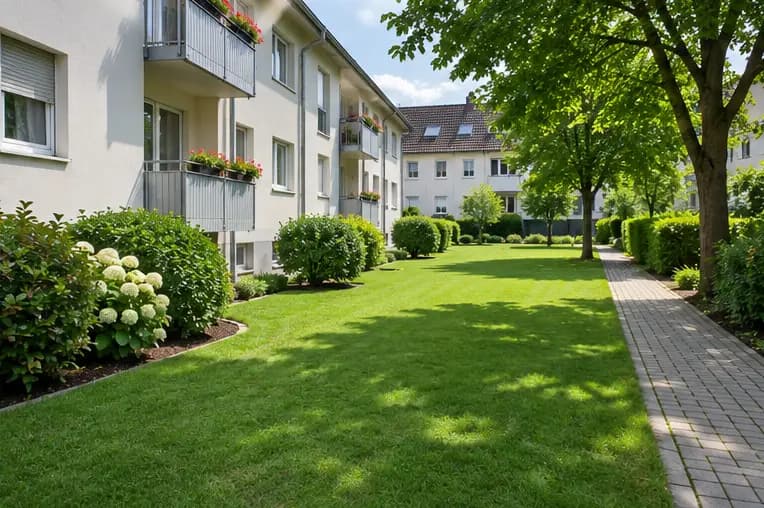
Garden care for shared residential spaces
A communal garden needs to work for residents, visitors and the people who manage the building. A clear entrance, lawn that can be used, and beds that remain recognisable matter more to everyday use than treating every square metre in the same way. MONSA works with property managers, owners' associations and landlords around Grevenbroich to define which parts of the grounds require care. Regular work can cover mowing, lawn edges, beds, hedges and leaf clearance according to the property and season.
The useful starting point is the property itself. One block may have a small front lawn, several separate entrances and a rear garden reached through a narrow side gate. Another may have continuous lawns, play areas, parking bays and boundaries shared with neighbours. A maintenance request can distinguish shared landscaping from private garden areas and define what is included before residents or site staff have to answer questions on the day.
Map entrances, lawns and boundaries
Walk the grounds from the point where the team will arrive to the farthest area that needs maintenance. Note building entrances, bin areas, parking access, narrow routes and locked gates. Photographs taken from a few different points are often enough to make the route clear. For a large development, a simple marked site plan works better than a list of directions. Mark areas outside the remit of the association or landlord so the scope is easy to follow.
Draw attention to the spots residents notice most. These frequently include the path between the street and entry door, the area beside outdoor seating and the boundary where hedges touch paths or parking spaces. At quieter points around the perimeter, an occasional visit may suffice. Identifying these differences in advance makes it possible to agree separate priorities rather than defaulting to a single maintenance interval across the entire site.
Define the work to be done regularly
Write down the recurring tasks in plain terms for each part of the property. An example is mowing the shared lawns, trimming specified edges and maintaining the beds beside the entrance. Another area may require clearing leaves from a route to the bins, or trimming a low hedge that narrows a path. Include details that affect execution, such as whether grass clippings should be collected and which hedge faces are accessible.
Agree what counts as a seasonal or separate job. A hedge that needs a larger reduction, a lawn that stays wet or a damaged section of fence may deserve an assessment apart from routine maintenance. Recording a single point of contact for such questions is useful. It helps avoid contradictory instructions when residents, building staff and the property manager have different views about how an area should look.
Build a schedule that follows the property
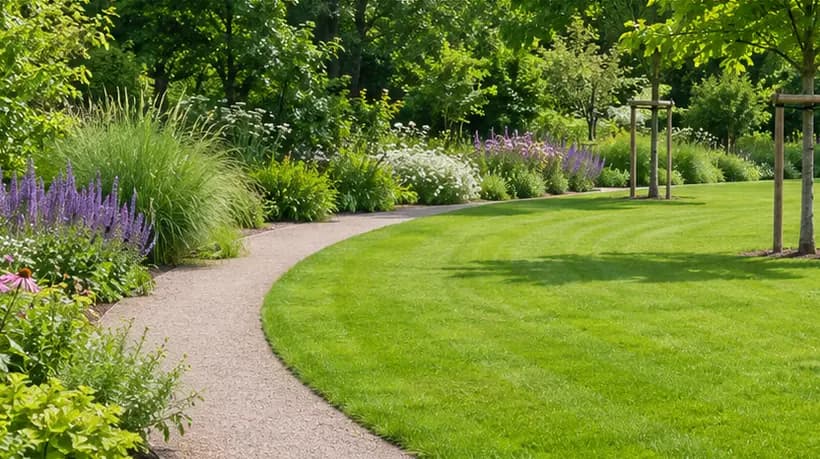
A maintenance schedule is more useful when it reflects the grounds than when it is built around a fixed list of dates alone. Lawns and beds can need more attention when growth is active. At the same time, the entrance and the routes residents use should remain clear even in places where the planting needs relatively little work. Mark which tasks are frequent, which are seasonal and which are requested only as an exception.
For properties with several addresses or entrances, agree whether to group visits. Working across adjoining buildings in one session may make sense when access is straightforward and the tasks are similar. If different entrances have different contacts, keys or restrictions, confirm those details in advance. The schedule can then describe the work in a way that the manager, caretaker and contractor can all follow.
Arrange access and communication
A clear access plan saves time after arrival. Give the team a point of contact, instructions for entering the grounds, and the areas where equipment can be brought in without obstructing residents. If the property has limited parking or sensitive time windows, name them. Make it clear which places need particular care, such as paths used throughout the day or gates that must be closed when work is finished.
Decide who can confirm changes to the agreed scope. Residents can point out something they have noticed, but it helps to have the property manager or a designated contact approve a new recurring task. If you want to receive a short update on particular areas or changes in condition, agree that before the first visit. A consistent route for questions is more useful than relying on chance conversations while work is underway.
Keep shared planting and walkways in order
A community lawn usually serves more than one purpose. The strip around the building may mainly provide visual separation while the central area is used for sitting or playing. Maintenance in the two areas can reflect those uses. Similarly, a hedge beside a path may need an outline that keeps space available for pedestrians, whereas a boundary hedge may be maintained primarily for privacy.
Beds near entrances can also contain a mixture of established planting, bulbs and ground cover. Identify plants that must be retained and specify whether attention should focus on visible weeds, edging or a broader tidy. An agreed baseline makes it easier to recognise changes such as areas that collect standing water, places where grass has worn away or borders increasingly difficult to access. Such points can be reviewed separately from the scheduled work.
Plan seasonal work and material removal
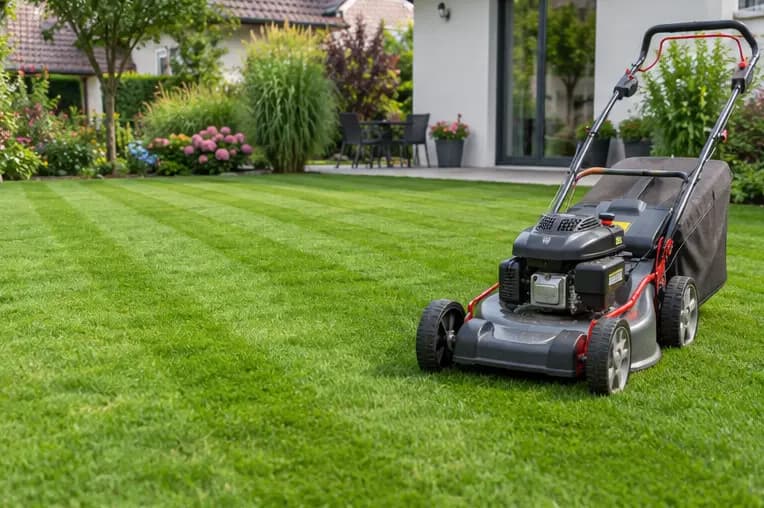
Spring work may focus on checking how lawns and beds have come through winter and clearing accumulated material. During periods of active growth, mowing and bed care are likely to take up more of the schedule. In autumn, look for places where leaves collect, such as stair entrances, corners beside bins and paths shaded by trees. Instead of assuming every bed needs full clearance, agree which surfaces residents need in good condition first.
The plan should cover where cut material and leaves go. Some properties have a designated point for green waste, whereas others need arrangements to take it away. If a bin store cannot accommodate the expected amount, state that before the visit. Also identify any collection point ruled out because it would obstruct a route or an entrance. Material left from earlier work should be discussed separately so the team knows what has been agreed.
Compare proposals by scope and frequency
A proposal for communal garden care is easier to compare when it states the areas, standard tasks and expected frequency. A rate alone does not explain whether all lawn edges are included, whether both faces of a hedge are accessible or how leaf clearance is handled. The same applies to small jobs outside routine care. Distinguish the regular visit from optional tasks so you can check the proposal against the property's actual needs.
For a first request, send the property's address, a description of the shared grounds, the preferred interval and wide photos of the main areas. Mention any concurrent work, difficult access or outdoor areas managed by another party. If you have an existing maintenance description, share the parts that still meet your requirements and identify what needs to change. That gives MONSA and the property manager a common basis for discussing the next schedule.